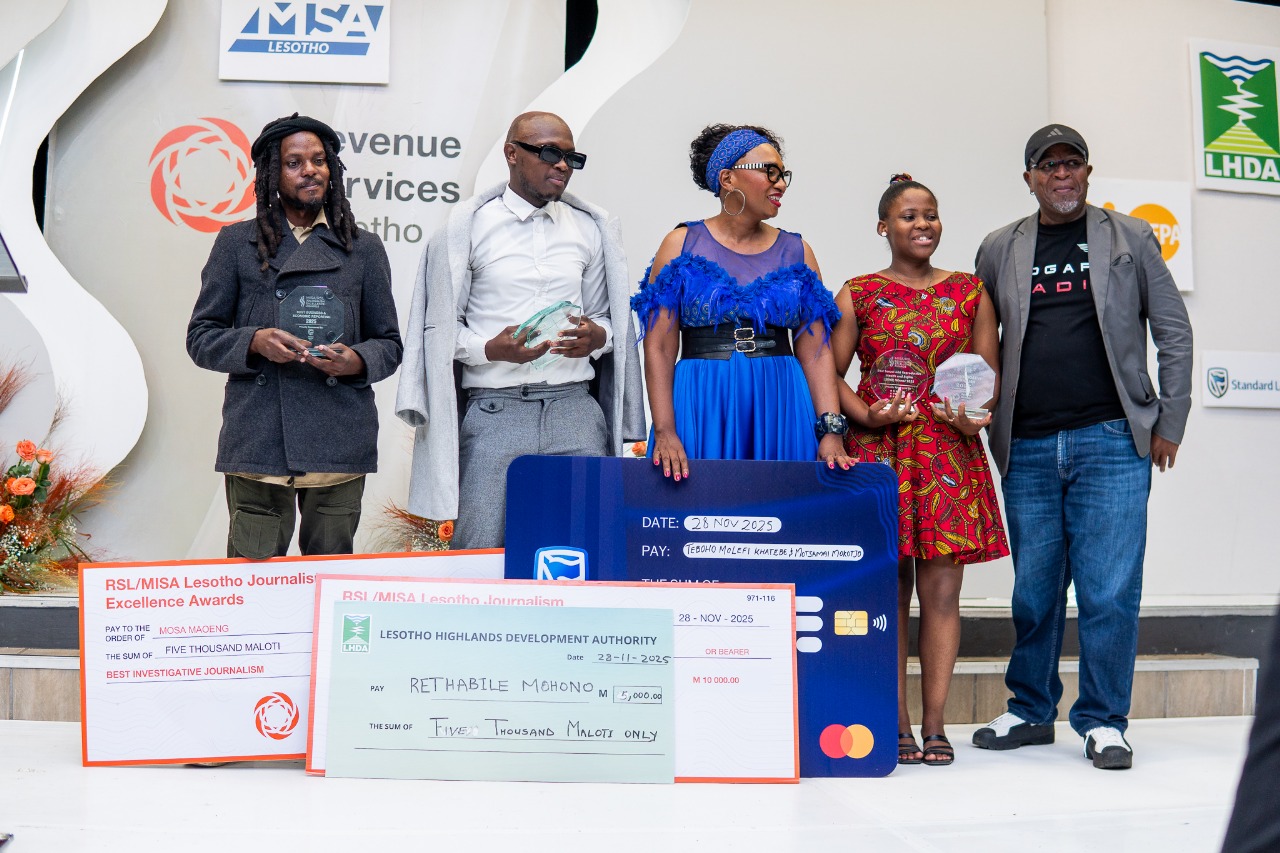
The Media Institute of Southern Africa – Lesotho Chapter (MISA Lesotho), in partnership with the Revenue Services Lesotho (RSL), hosted the MISA/RSL Journalism Excellence Awards 2025 at Victory Hall last Friday, November 28th, honouring outstanding media work across multiple reporting categories. This year’s event, held under the theme African Excellence, recognised journalists who demonstrated integrity, depth, and public impact in their reporting.
The Awards are only in their second year, but the organisers made an intentional shift: a fully anonymised judging system and digital submission forms synced through Google Workspace.
This allowed judges to focus on stories, not reputations.
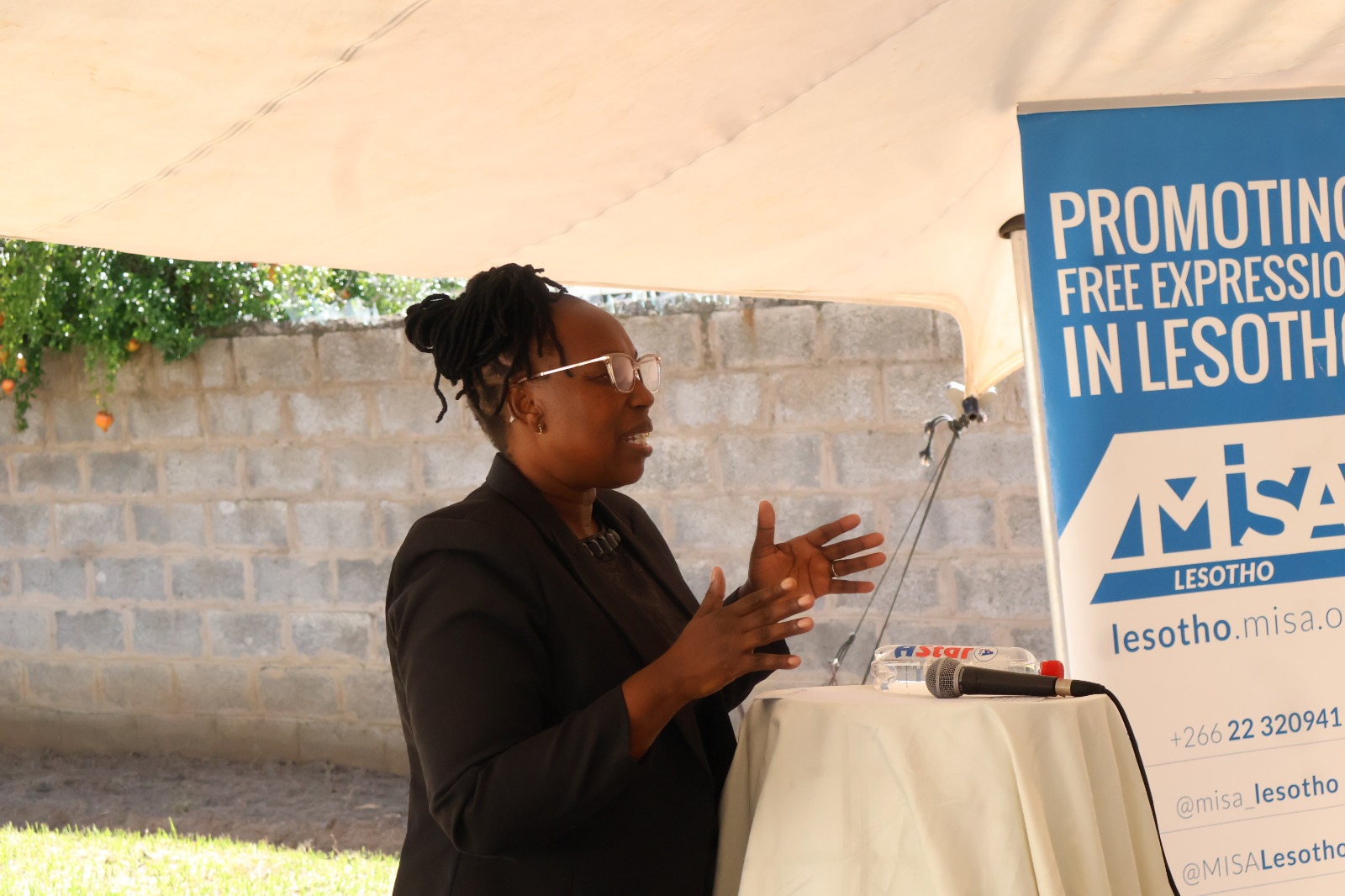
“Sometimes a journalist’s name or media house can sway judgment,” MISA Lesotho’s Acting National Director, Nicole Tau later explained. “We wanted to capture the essence of journalism.”
Five individuals from academia, print media and civil society reviewed every entry according to strict criteria: fairness, originality, ethical standards, craftsmanship, and public impact. The weighted scoring formula, computed through a multi-step spreadsheet system, produced a shortlist that emphasised quality, not popularity.
What emerged was clear: Lesotho’s journalism sector is uneven, with pockets of extraordinary excellence overshadowed by systemic weaknesses. And yet, excellence was there, stubborn, bright, undeniably present.
The night’s highest honour, Journalist of the Year 2025, went to Rethabile Mohono, whose rigorous reporting on social justice issues secured him two major wins, including the Best Human Rights Reporting category and Best in Sexual and Reproductive Health and Rights Reporting.
Mohono’s victory highlighted the crucial role Basotho journalists play in holding institutions accountable. His winning work was lauded by the judges for its depth on law and context, particularly his piece on Human Rights, which addressed the complexities of a highly sensitive case while ensuring the victim’s voice and parental context were captured without resorting to sensationalism. His focus on legislative pieces and school governance provided a rare, systemic critique, proving that impactful journalism is about meticulous legal homework as much as it is about compelling storytelling.
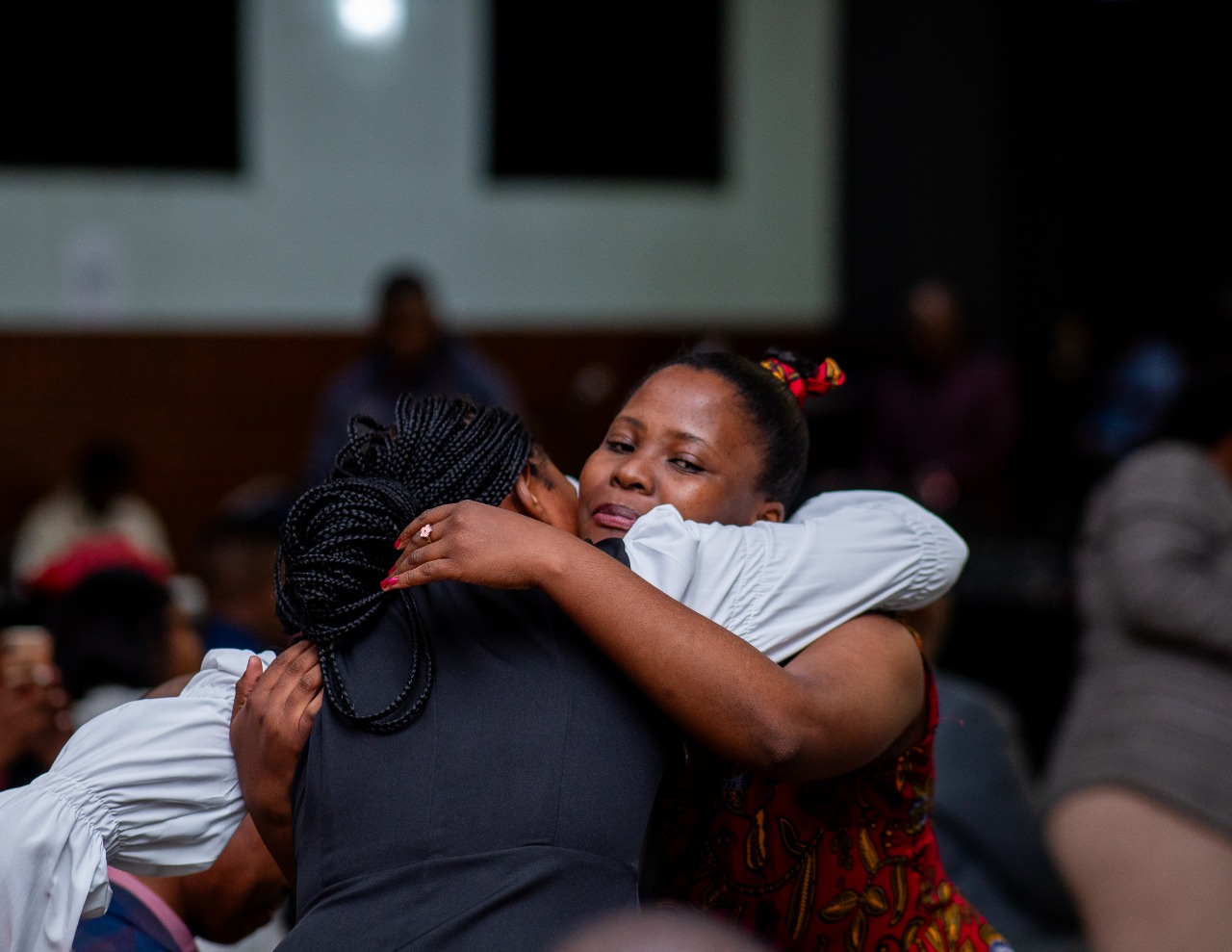
Full List of 2025 Journalism Excellence Award Winners
The celebration honoured the breadth of quality journalism across vital sectors:
Best Business & Economic Reporting Teboho Molefi Khatebe & Motsamai Mokotjo
Best Health & Public Health Reporting: Pascalinah Kabi and Oshenea Leche
Best Human Rights Reporting: Rethabile Mohono
Best Gender-Sensitive Journalism: Liapeng Raliengoane
Best Early Childhood Development Reporting (Print): Itumeleng Chelele
Best Investigative Journalism: Mosa Maoeng
Best Environmental / Climate Change Reporting: Seithati Motsoeneng
Best Sports & Entertainment Journalism: Chris Theko
Best Political & Parliamentary Affairs Coverage: Neo Kolane
Best Photojournalism (Visual Journalism Excellence): Molise Molise
Best Sexual & Reproductive Health and Rights Reporting: Rethabile Mohono
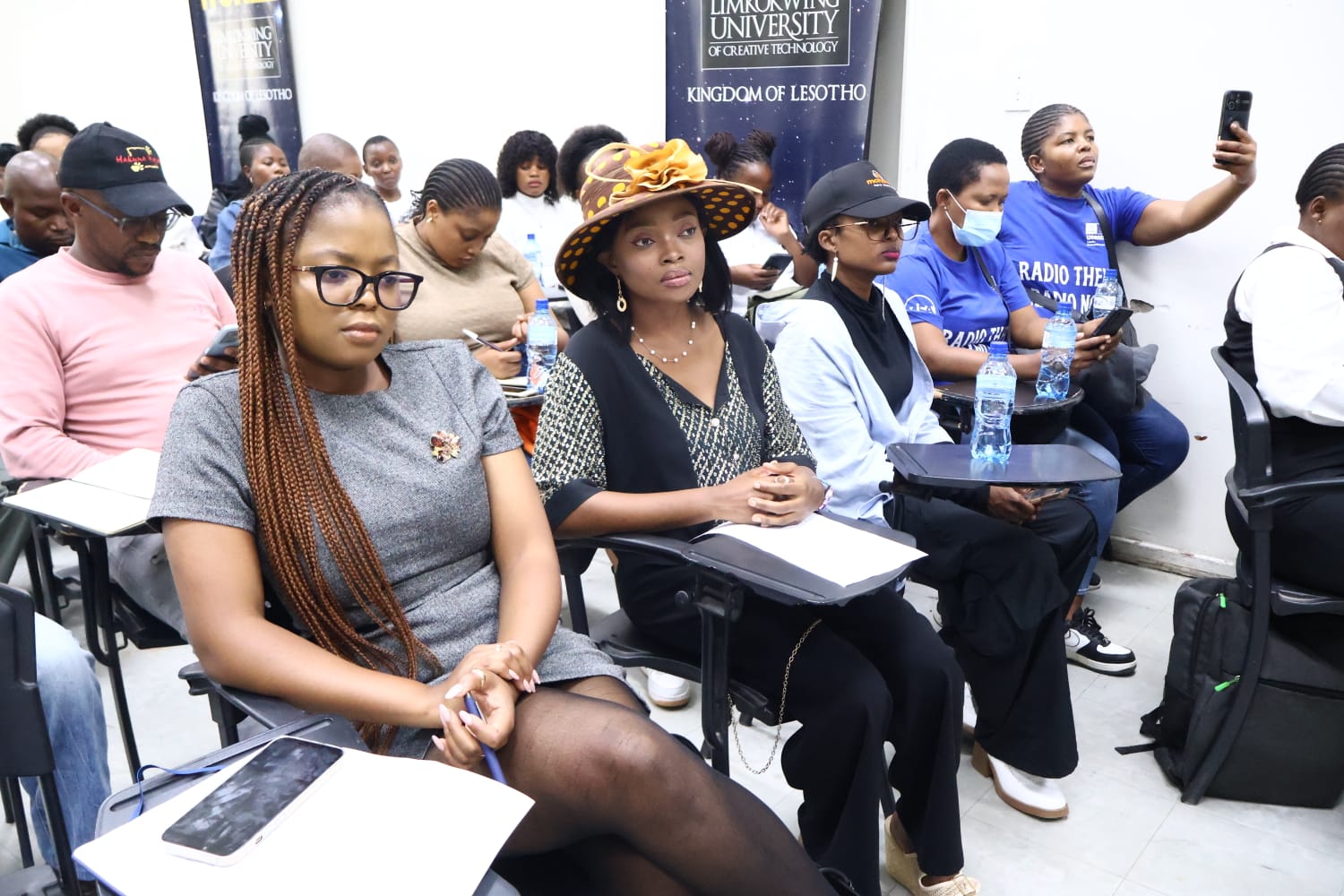
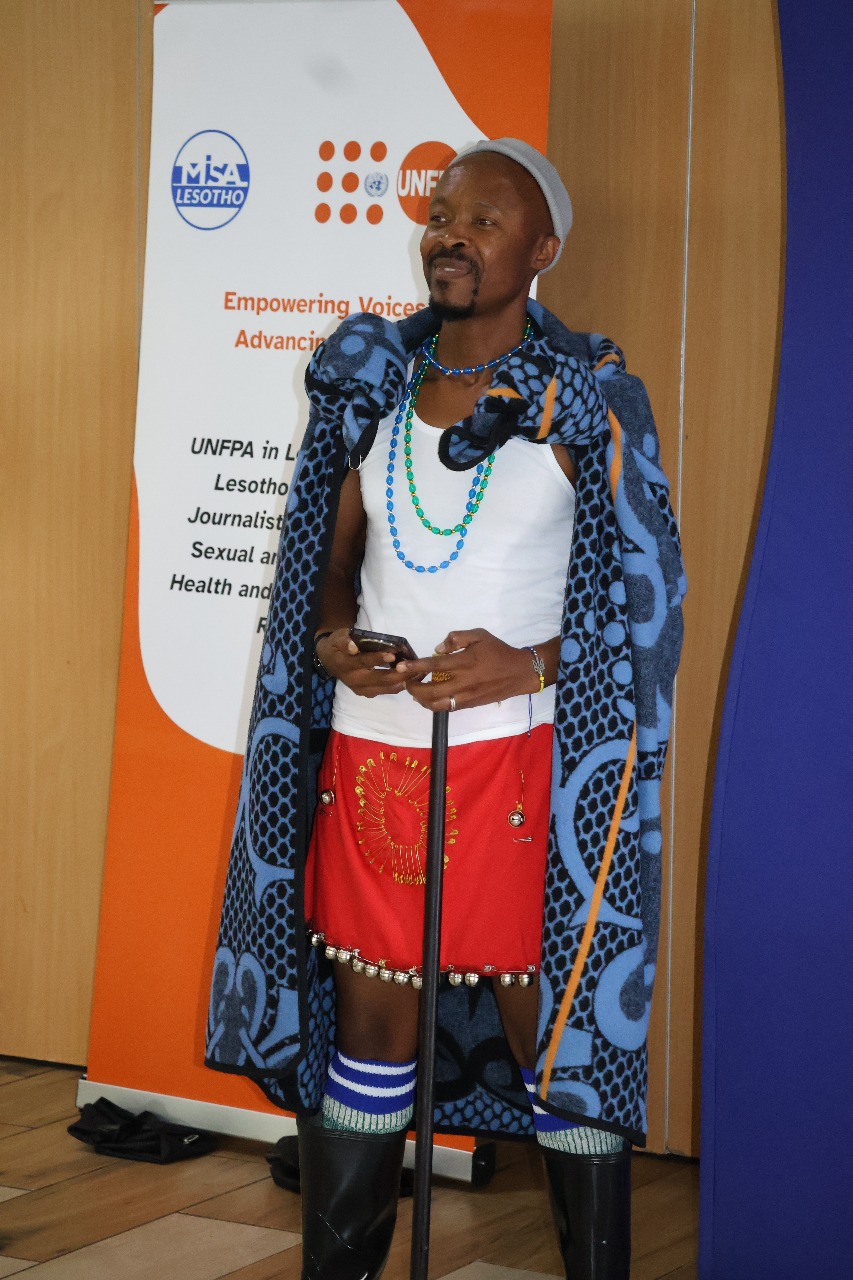
The hall’s atmosphere was a visual paradox. Attendees, following the “African Excellence” dress code, filled the venue in a beautiful tableau where traditional Basotho blankets were integrated with sleek, modern tailoring. This aesthetic created a sense of defiant elegance, a celebration held with dignity and seriousness, subtly emphasizing that the media’s pursuit of truth is intertwined with the nation’s identity and culture.
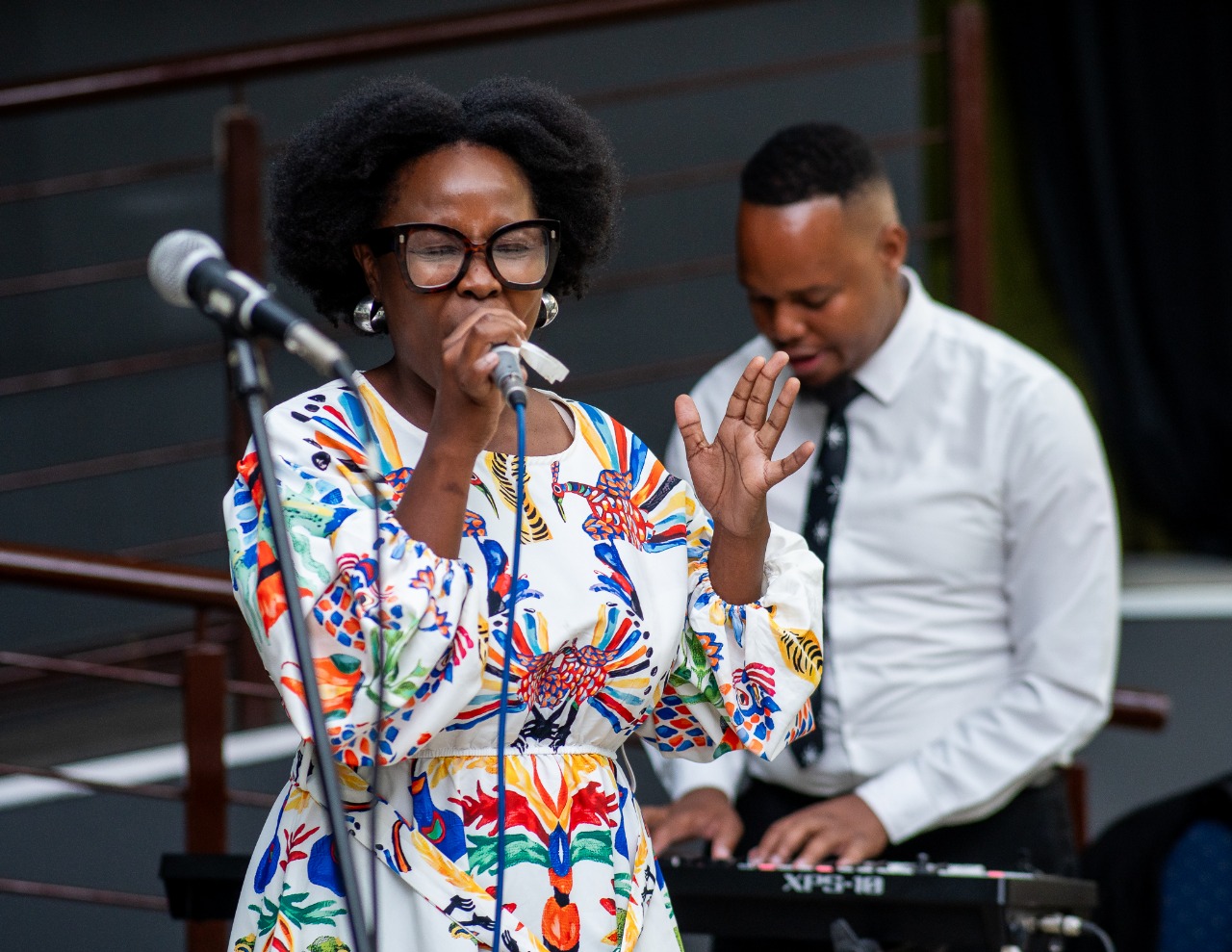
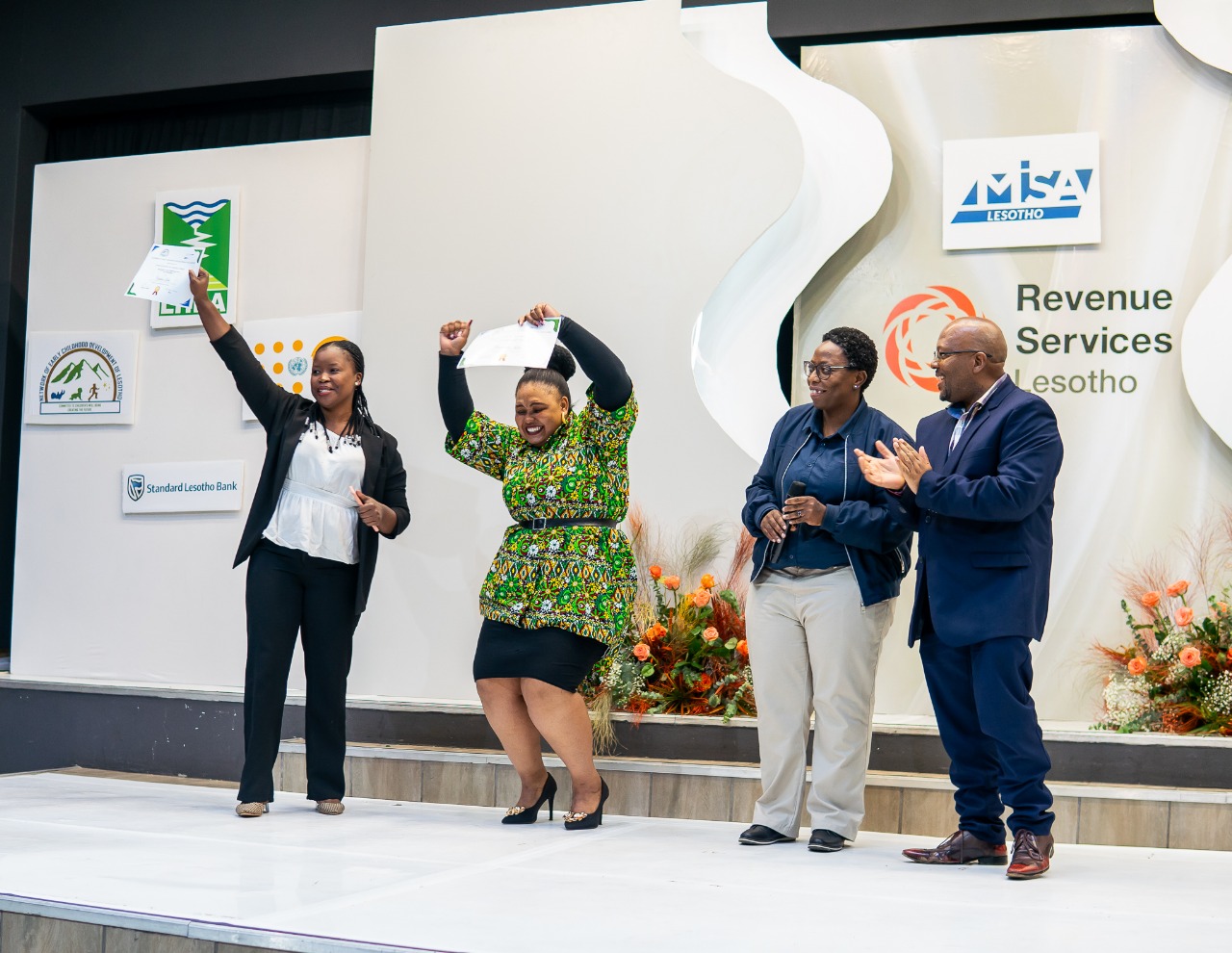
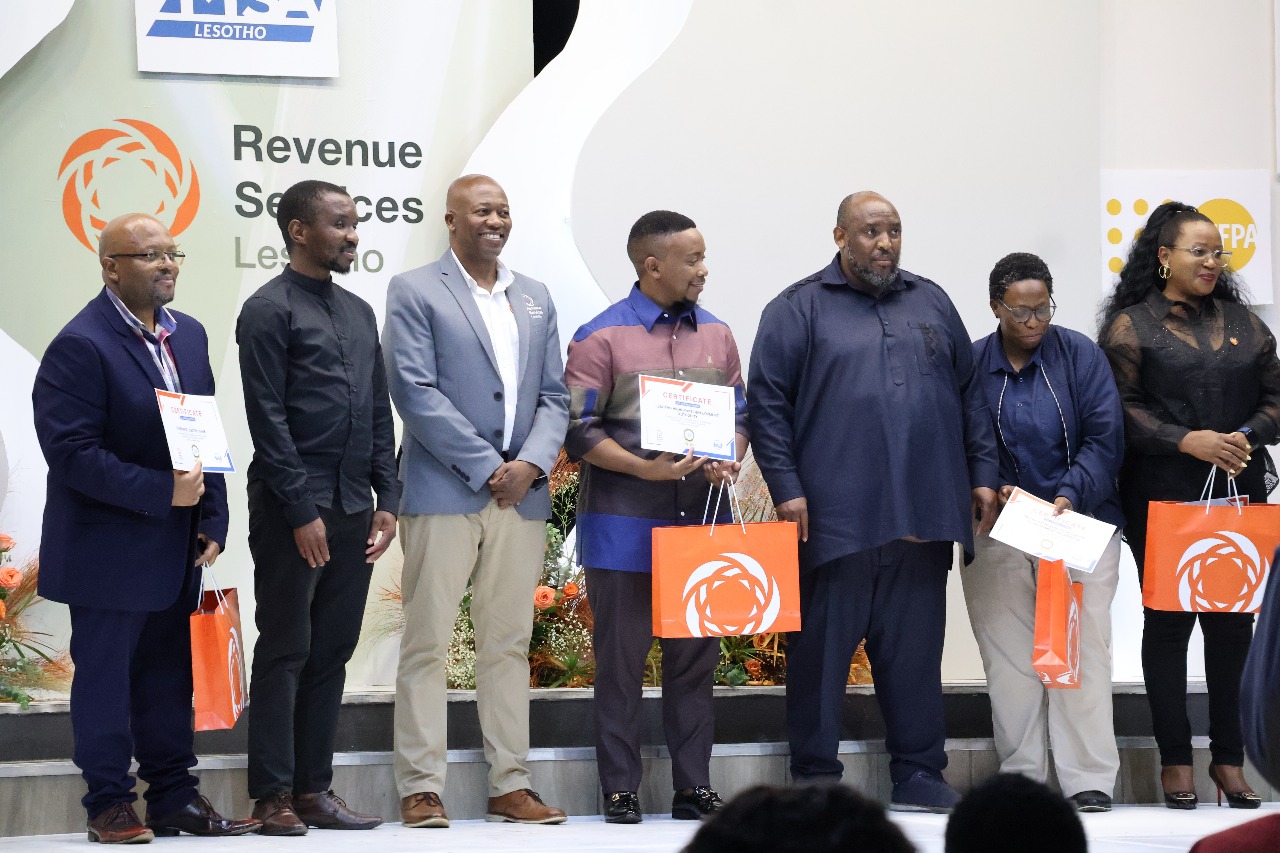
The day, expertly guided by the Commissioner General of RSL, and that day’s, program director Refilwe Mathabo Mokoko, began not with applause, but with a solemn prayer, acknowledging God’s blessing on the event and asking that the journalists’ stories “bring light where there is darkness.”
Setting the tone early, MISA Lesotho Chairperson, Kananelo Boloetse, delivered a candid message about collective responsibility and gratitude:
“This would not have been possible without the Sponsors… let’s let our attitudes reflect that and any criticism should be constructive, recognising the sacrifices and efforts that it took to organising this awards. The bottom line is that they are for us journalists. We are the ones who’ll protect them, we’re the ones who’ll make sure they grow…”
Following the Chairperson’s address, Tau, the Acting National Director of MISA, acknowledged the immense administrative hurdles overcome to host the event, praising her small organizing committee of four for their integrity and sacrifice. This tribute to the “unseen engine” drew a moment of genuine, heartfelt applause.
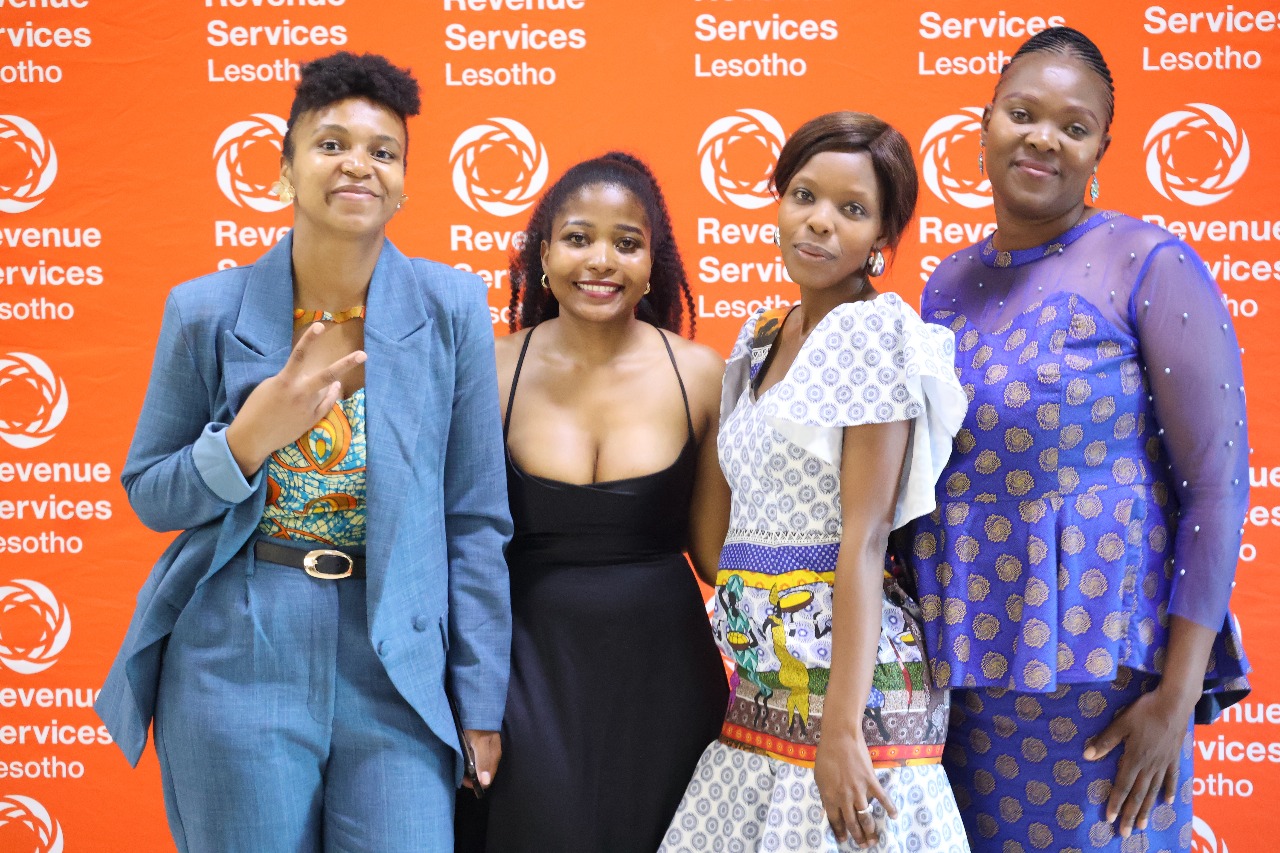
Tau also delivered the night’s poignant message, echoing the high stakes involved in their profession:
“Here in Lesotho, our best journalists know that the story is the source. And our duty is to make sure that source, no matter how complex the development plan, is fully accountable, transparent, and scalable for the public good.”
The Principal Secretary for the Ministry of Communications, Kanono Ramashamole later responded to these calls, assuring the media that the Ministry would begin the process early next year to develop consolidated legislation for a Media Council and Ombudsman, placing the evening squarely within the global context of media regulation and democratic stability.
Across Southern Africa, journalists face mounting pressures: escalating corruption, political tensions, digital threats, and widespread economic decline that erodes newsroom independence.
And yet, in Lesotho, this year’s awards received a highly encouraging total of 53 entries for adjudication, marking a significant growth in submissions over the previous year.
Some came from remote districts, Mokhotlong, Butha Buthe, Qacha’s Nek, where media infrastructure is sparse and internet connectivity unreliable, but where stories of national importance often begin. Dozens of pieces judged anonymously, demonstrated something essential: excellence does not emerge from comfort. It emerges from necessity.
The MISA Awards were supported by key partners including RSL, Standard Lesotho Bank, United Nations Population Fund (UNFPA) Lesotho, Lesotho Highlands Development Authority (LHDA), and Network of Early Childhood Development of Lesotho (NECDOL). The gathering served as a reminder that while the future of press freedom remains “unfinished work,” as analysts often observe, Lesotho’s journalists are armed with talent, tenacity, and a celebrated commitment to the truth.
In closing, organisers encouraged journalists to continue striving for higher professional standards, with plans for future capacity-building initiatives beginning in 2026. MISA Lesotho also confirmed that future editions of the Awards will introduce improved support for broadcast entrants, following repeated concerns about the quality of submissions.