Nicole Tau
There are only three young Members of Parliament in Lesotho’s National Assembly. None of them is a woman. That statistic sat uneasily with me during a five-day workshop designed precisely to get journalists thinking more deeply about youth participation, gender equality and democratic governance.
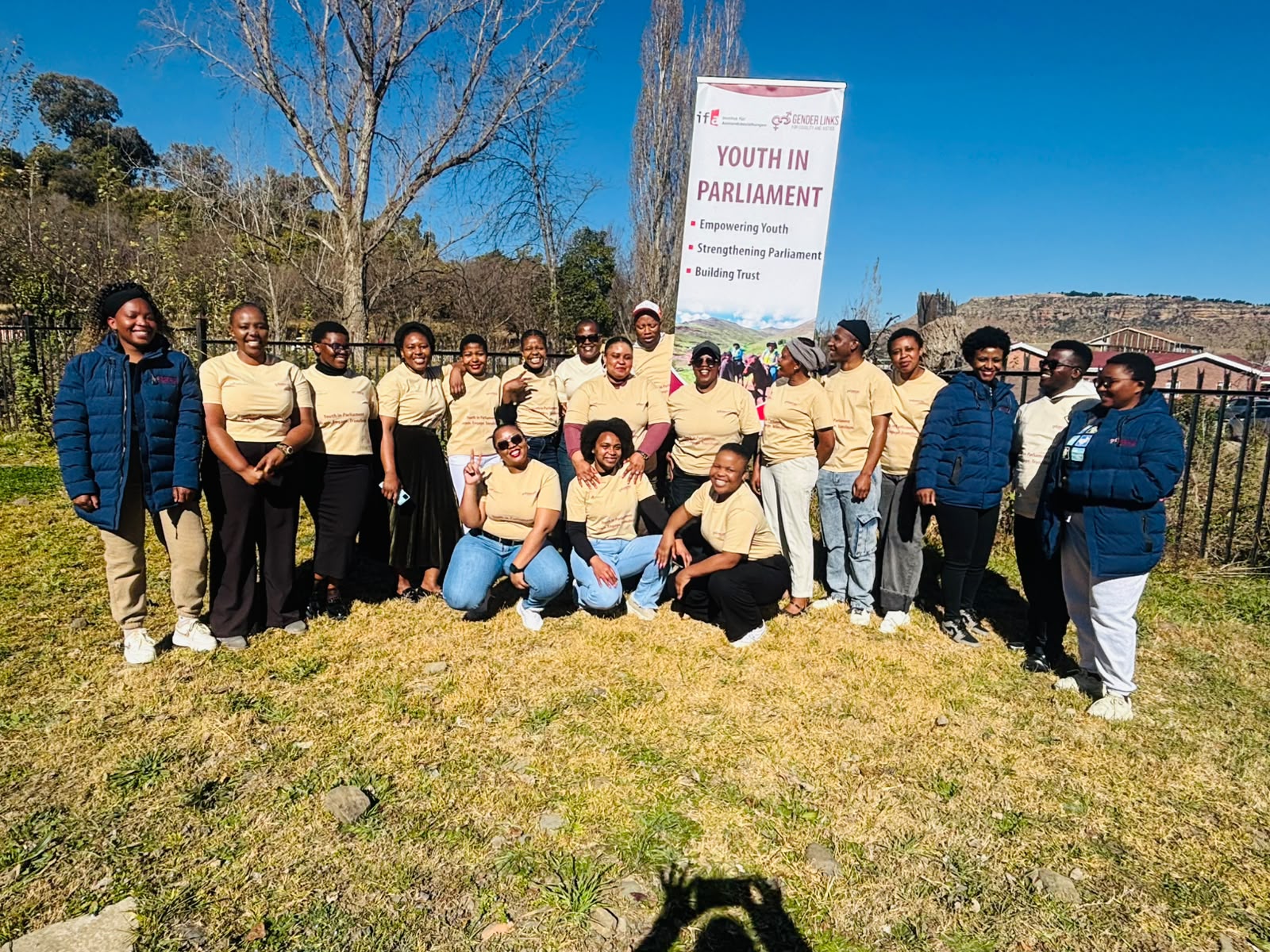
The Youth in Parliament capacity-building workshop, organised by Gender Links- Lesotho in partnership with MISA Lesotho, brought together 15 young journalists and media practitioners in Maseru from 27 to 31 July 2026. The training was aimed at journalists under 35 with an interest in governance and public accountability reporting.
Its stated purpose was practical: strengthen journalists’ understanding of Parliament, civic education reporting, ethical journalism, media advocacy and parliamentary accountability.
But by the end of five days, I found myself thinking about a question that went beyond journalism.
Who gets to speak for the ordinary Mosotho?
It is a question worth asking because Parliament is supposed to be one of the places where the experiences, interests and aspirations of citizens are translated into laws, policies and public decisions.
And yet the people occupying that space cannot be assumed to reflect every part of the society they represent.
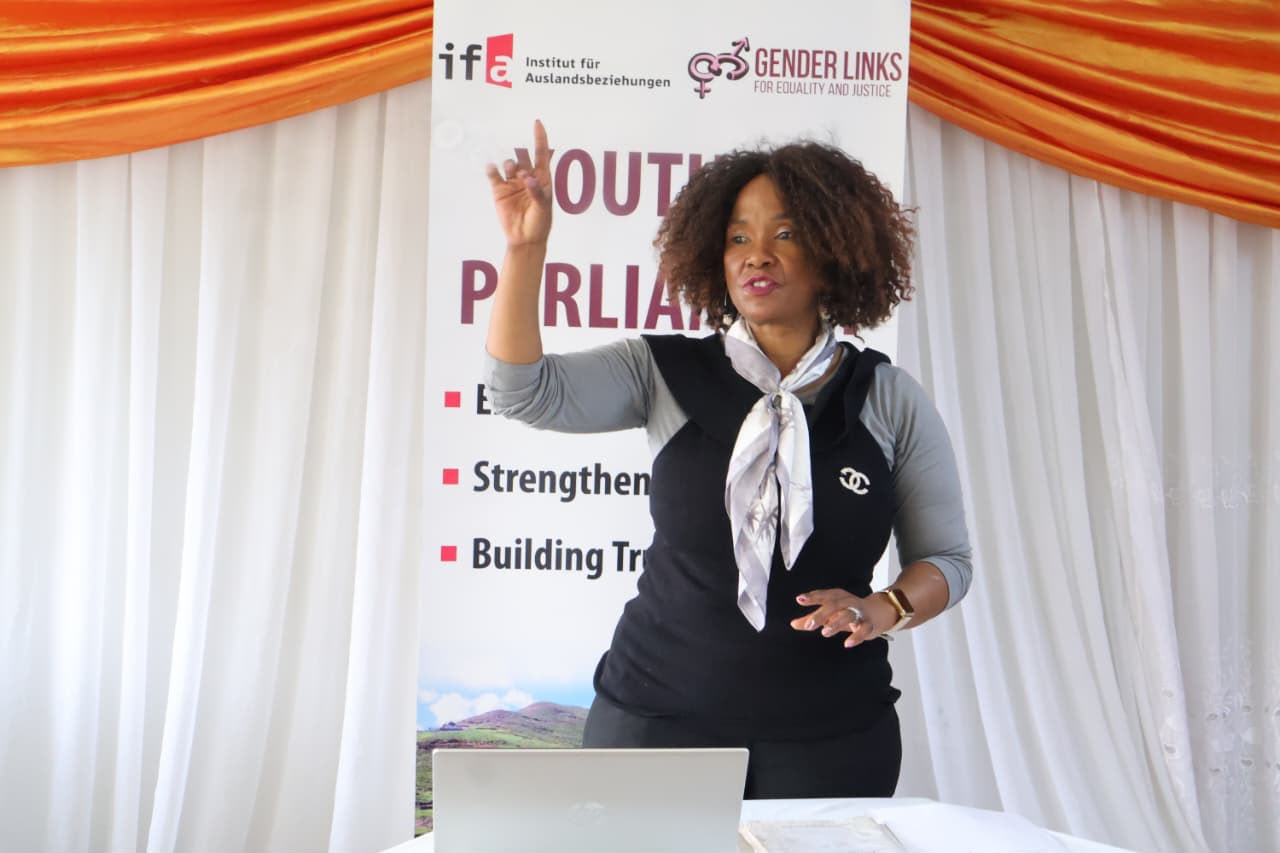
During the workshop, Deputy Speaker of the National Assembly, Hon. Ts’epang Ts’ita Mosena, put that gap plainly before us.
Young people, she observed, make up a significant part of Lesotho’s population, but their presence in the National Assembly remains limited. The House, she argued, should work towards at least 40 percent youth representation.
Her point was not simply that young people should be present for the sake of having younger faces in Parliament.
It was that young people should have a direct role in decisions affecting their lives.
Then came the figure that made the argument concrete: the National Assembly currently has only three young Members of Parliament, all of them men.
In a country where young people are routinely described as the future of Lesotho, their representation in one of the institutions responsible for determining that future remains remarkably small.
And the absence of young women makes the question more complicated.
We speak about youth representation as though “the youth” are a single constituency. They are not.
Young Basotho do not experience unemployment, political participation, access to finance, education, healthcare or economic opportunity in exactly the same ways. Gender, geography, class, disability and other circumstances shape those experiences.
So the question cannot simply be whether Parliament has enough young people.
It must also be: which young people get there?
Learning to report the institution, not just the politician
It would have been easy to treat the five days as another training programme for journalists, another room, another set of presentations, another certificate at the end. It was not.
The training required us to look more closely at an institution that journalists routinely cover but do not always explain well.
The participants came from different media backgrounds, including print, radio and digital platforms. The selection was deliberately limited to 15 young journalists and media practitioners, with preference given to those under 35 who had demonstrated an interest in governance and public accountability reporting.
The relatively small group mattered. It allowed the sessions to become conversations rather than simply lectures. Questions were asked. Assumptions were challenged. Experiences from the newsroom were brought into the room and tested against the realities of parliamentary work.
The workshop began with Tsebo Matsasa as the first facilitator, grounding the discussions in the relationship between journalism, governance and the public interest.
That foundation was important because parliamentary journalism is not simply about knowing where Members of Parliament sit or understanding parliamentary terminology. It is about understanding power.
A journalist covering Parliament needs to know what is being decided, who has the authority to decide it, what mechanisms exist to scrutinise those decisions and, ultimately, how those decisions affect citizens.
That sounds obvious, but in practice, it is not. A parliamentary sitting can produce an easy headline: a politician attacks another politician; a minister makes a promise; an opposition MP raises an accusation; tempers rise.
The harder story is often buried underneath. What does the Bill actually change? What evidence was presented? What does the relevant committee report say? What money is involved? What has happened to the previous policy? What happens next? Who is responsible for implementation? And what does all of this mean for the person who will never sit in the parliamentary gallery? Those are the questions that turn parliamentary reporting from political transcription into journalism.
Parliament beyond the chamber
One of the things the workshop reinforced for me is that Parliament is much bigger than what happens during the most visible debates. Some of its most consequential work takes place away from the political theatre that tends to attract the cameras.
Committees scrutinise government departments and public expenditure. Members examine legislation. Questions are asked about implementation and service delivery. Reports are produced. Oversight takes place.
For citizens, however, much of this work can be difficult to follow. That creates an important responsibility for the media.
If journalists report only the most dramatic moments, citizens can end up with a distorted understanding of Parliament. They see the confrontation but not necessarily the committee work. They hear the accusation but not always the evidence. They know who shouted but not what was decided.
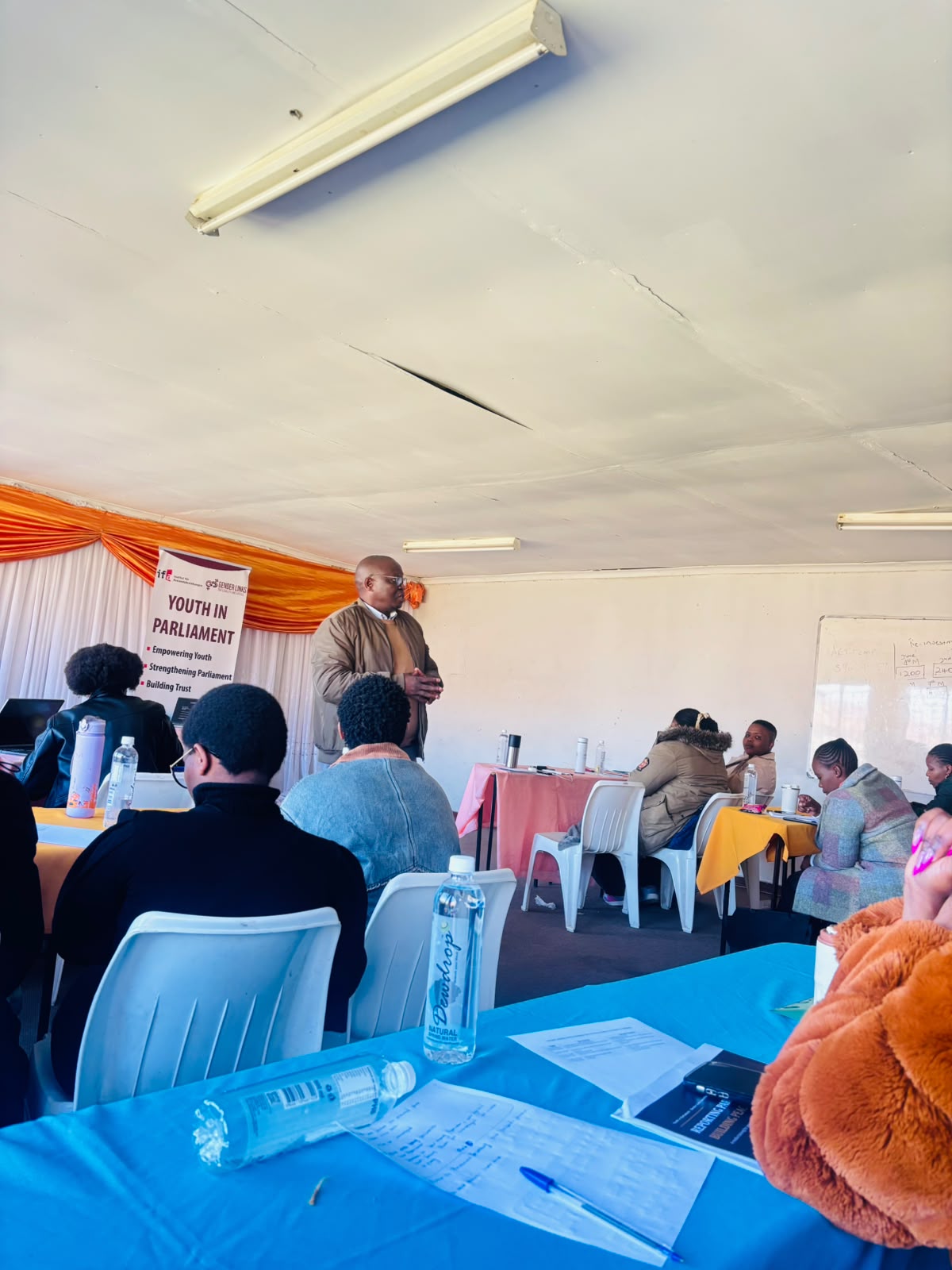
During one of our workshop sessions, Senator Hon. Seabata Motsamai issued a direct challenge to the room: the responsibility now rests heavily on journalists. As agents of change, media practitioners hold the unique power to influence public discourse without infringing on democratic rights, simply by changing how we frame the narrative.
Because Parliamentary oversight can sound technical and distant, public expenditure can sound like an issue for accountants and committee reports can seem less compelling than political confrontation. But those processes eventually become very tangible to ordinary people.
They can determine whether public money reaches its intended purpose, they can expose weaknesses in service delivery, raise questions about why a government programme is failing and reveal whether policies announced with considerable political fanfare are actually being implemented. The journalist’s job, then, is partly to translate. Not to simplify to the point of distortion, but to make institutions intelligible to the people whose lives those institutions affect.
The politics of who gets a seat
The youth representation discussion inevitably took us beyond Parliament itself. Who gets to become an MP in the first place?
Political parties are important gateways into formal politics. They determine, to a significant extent, who receives political opportunities, who appears on party lists and who is given the resources and organisational support necessary to contest elections. Yet young people face familiar barriers.
Participants pointed to limited financial resources, inadequate support among young people themselves and cultural norms that can discourage younger people from seeking leadership positions.
For young women, the barriers can be even more complicated. This is why I found the statistics about the three young MPs so difficult to dismiss as merely another representation figure.
There are two questions embedded in it. Why are there so few young people? And why, among those few, are there no young women? Those questions require more than another conference or political speech. They require us to examine the structures through which political participation happens, for political parties to consider whether young people are being treated merely as campaign mobilisers and voters, or as potential decision-makers, for citizens to examine what they expect from political leadership and for journalists to keep asking questions long after a workshop has ended.
What should we actually expect from our representatives?
This is where the workshop became personal. The conversation about representation sometimes stops at numbers. Because Yes, we need more women, more young people, more people from marginalized communities. All of these statements can be true.
But representation is not the only measure of a good Parliament. The harder question is what happens once people get there.
What do we expect from someone entrusted with legislative power? Do they understand the Constitution and the laws they are expected to make or oversee? Do they understand public finance? Scrutinise a government programme? Distinguish between party interest and public interest? Are they willing to ask difficult questions? Explain their decisions to citizens? Do they understand the communities they represent? And, perhaps most importantly, are citizens able to assess their performance on the basis of evidence rather than personality? These are the questions that should form part of our political culture long before election day.
Yet elections can easily become intensely personal. People vote for parties they have always supported. They vote for candidates they know. They vote out of loyalty, admiration or fear. They vote because a candidate made a promise. They vote because a particular political identity feels familiar. None of this is uniquely Basotho.
But it does raise an uncomfortable question about the quality of information available to voters. A citizen cannot make a fully informed political judgement about a candidate they know little about. And that is where journalism enters the conversation.
The journalist is not the kingmaker
Senator Seabata Motsamai, who also engaged with the journalists during the workshop, challenged us to think seriously about the media’s role in public discourse and youth participation.
That responsibility comes with a necessary boundary. Journalists are not kingmakers. Our job is not to tell citizens whom to elect. It is to ensure that citizens have enough credible information to make their own decisions. That distinction is particularly important as Lesotho moves towards another electoral cycle.
Responsible political journalism should not become campaigning by another name. But neither should “balance” become an excuse for shallow reporting. If a politician makes a claim, the journalist should be able to ask what evidence supports it. If Parliament passes legislation, citizens should be able to understand what the legislation does.
If public money is allocated, the public should be able to follow where that money goes. If an MP makes a promise, someone should eventually ask whether it was fulfilled. And if Parliament is failing to represent a particular part of society, the numbers should be reported and interrogated. That is not activism. That is accountability journalism.
Young people are not a future constituency
Perhaps the most important lesson I took from the workshop is that the language we use about young people needs to change.
Young people are constantly described as “the future”. But young Basotho are already citizens. They are already paying taxes, looking for work, starting businesses, trying to access education and healthcare, already are affected by laws and budgets passed by Parliament and they are already voting.
So the question is not how we prepare young people for some distant future in which they will finally participate. The question is how we make democratic participation meaningful now.
The same applies to women. Representation should not be treated as a favour extended to a particular demographic group. It is about whether the institutions making decisions for society are genuinely open to the society they serve.
As a woman and a professional, I am conscious of the difference between being able to observe a room and believing that you belong in it. That distinction matters in politics too.
How does a young professional from an ordinary background move from watching politics to participating in it?
How does someone without a famous surname, substantial financial resources or an established political network compete for political space?
What structures make that journey easier, or harder?
Those are questions worth asking not only of Parliament, but of political parties and of ourselves as citizens.
The role of journalism in closing the distance
One of the strongest arguments for a workshop such as this is that democratic participation depends partly on whether citizens can understand the institutions around them.
A Parliament that citizens cannot understand becomes distant. A political system that citizens cannot interrogate becomes opaque, and a media that reports political personalities without adequately explaining political processes can unintentionally deepen that distance. This is why parliamentary journalism matters
Five days, and a much bigger question
By the fifth day, I was left with a feeling that had little to do with the certificate that might eventually prove that we had attended the training.
The workshop had started with a fairly specific objective: equip young journalists with better tools for reporting on Parliament, youth participation, gender equality and democratic governance. It achieved that.
But it also left us with a more uncomfortable responsibility. Once you understand how an institution works, it becomes harder to report on it superficially, simply repeating a political statement is no longer enough, it becomes harder to pretend that Parliament is only the speeches delivered from the floor and once someone tells you that there are only three young MPs, and no young women, you cannot easily unhear the question of who is missing.
That, perhaps, is the value of journalism training at its best. It does not simply give journalists more information. It changes the questions they ask.
For MISA Lesotho and Gender Links, the investment in training young journalists is therefore also an investment in the quality of public debate. The 15 journalists who sat in that room will return to different newsrooms, platforms and audiences. What we do with what we learnt will ultimately determine whether the training remains a five-day exercise or becomes part of the journalism we produce.
A functioning democracy requires institutions populated by people who are capable of exercising public responsibility, citizens equipped to judge their performance, political parties willing to open pathways into leadership, and journalists willing to interrogate all of it.