Nicole Tau
Every journalist eventually has to accept a basic truth: people enter this field for vastly different reasons. Some are driven by a noble duty to inform, while others are motivated by influence, sensation, or profit. That is simply human nature. But what should concern us deeply is our growing failure to draw a clear line between the two, the same way society draws a distinct line between a law-abiding citizen and a criminal.
Today, various media platforms use journalism in their own ways. The real contradiction arises when an online page labels itself as a “News” outlet when, in reality, it is simply a commercial content operation with zero commitment to journalistic ethics.
In primary school, many of us were taught that “NEWS” stood for North, East, West, and South. I was today years old, when I discovered that it’s a myth. Apparently it sounded clever, so people repeated it. A great example of folk etymology. News actually originated from the word “new”, as in new things, new information.
I guess I don’t have to spell it in all caps anymore.
In reality, dictionary definitions describe news as reported material on current events. In Sesotho, Lesotho’s national language, news is translated as Litaba, a word deeply rooted in current affairs, community dialogue, and truth.
But what does it actually mean and why do we trust it so much?
According to Merriam Webster, news is “new information or a report about something that has happened recently”.
Sudhangshu Sekhar Roy’s paper argues that total objectivity in reporting is essentially an illusion, pointing out that news is not a neutral mirror of the world, but a social construction of reality heavily curated by media gatekeepers and editorial policies.
Idealists, hold on to your seats.
And because digital technology has drastically shortened the lifespan of news from a 24-hour print cycle to just a few minutes online, modern news organizations now focus heavily on presentation, framing, and sensationalism to capture immediate attention rather than simply reporting raw facts in real-time.
Wake Up!
That aligns closely with Roy’s breakdown of the news formula, where news is defined as an event plus human involvement plus reader interest. An occurrence doesn’t automatically become news until journalists assign it a specific angle that triggers an emotional or practical reaction from the public, like concern, shock, or curiosity.
As Roy highlights, editors don’t just passively collect what happens in the world; they actively select and manufacture stories based on marketability and editorial whim, proving that what we consume as “news” is largely subjective.
So are we essentially being told that news has taken on a new form in today’s media platforms? That the credibility of information is now determined by its gatekeepers?
Gatekeepers may not hold news hostage just yet, in Lesotho, but it does influence whoever comes across it.
Think of traditional news before this era as an official court record, and news after, the majority of current news, is a produced television show.
Grounded in the statutory powers of the Communications Act No. 4 of 2012, the enforceable rules of the 2022 LCA Broadcasting Code, and the guiding vision of the National Media Policy, our media framework treats news as a public trust rather than an unregulated commercial product.
Legally and ethically, licensed outlets are bound to strict standards of truth, balance, and editorial independence.
If a station airs an unverified or sensational story, any affected party can lodge a formal complaint with the Broadcasting Disputes Resolution Panel (BDRP). Following an investigation, the regulator holds statutory authority to compel the station to broadcast a prominent, unedited retraction and apology during the exact same time slot, impose financial penalties of up to M80,000, or suspend their broadcasting license entirely for repeated non-compliance.
For severe or repeated non-compliance, the LCA board holds the ultimate statutory power to suspend or completely revoke an outlet’s broadcasting license.
So what happens when Facebook social media call themselves News pages without any intention of complying with LCA regulations?
In practice, an unregulated Facebook page posing as a news outlet operates in a regulatory blind spot because the Lesotho Communications Authority’s mandate primarily covers traditional broadcast media, leaving social media outside direct licensing oversight.
Under Section 38 of the Communications Act of 2012, Lesotho’s legal framework strictly categorizes media into Public, Private, Commercial, and Community services, each carrying statutory public responsibilities. Unregulated Facebook pages fit into none of these legal buckets. They hold no license, answer to no statutory category, and exploit a legal vacuum to masquerade as news outlets with zero public accountability.
Without editorial standards or regulatory penalties to deter them, these pages thrive on algorithm-driven sensationalism and unverified claims to maximize engagement.
Consequently, victims of false reporting cannot rely on administrative retractions or regulatory fines, leaving them with limited, slow alternatives such as civil defamation suits, or criminal proceedings under statutory penal codes. Both of which can be quite expensive undertakings.
The danger of unregulated social media pages masquerading as news outlets lies in their complete lack of accountability.
When false claims involving the Bureau of Statistics circulated online, spreading false information about the Lesotho Census 2026, Public Relations Officer Neo Mokatsa highlighted this precise enforcement blind spot, noting that when they attempted to trace the individual behind the page, “it was like that person didn’t exist.”
Without named bylines, registered contacts, or editorial oversight, these ghost operations hijack the credible badge of “News” to publish unverified claims for clicks, leaving public institutions and citizens with no direct avenue for correction or recourse. And that can be dangerous.’
The Political Paradox: Validating the Unaccredited
What makes this enforcement blind spot even more dangerous is the complicity of public figures themselves. Chasing massive reach and instant engagement, politicians, government officials and religious leaders are increasingly seen posing for photo-ops, shaking hands on camera, and granting informal interviews to unregulated, unchecked, essentially “anonymous” social media operators.
This creates a glaring institutional paradox: government entities decry viral misinformation when it threatens public order, yet eagerly validate the very platforms responsible for it when seeking quick publicity.
Shaking hands with an unverified clickbait page trades institutional authority for temporary views. By treating anonymous content creators like accredited press, public officials subvert Lesotho’s media framework from the inside, signaling to the public that ethical standards, verification, and legal accountability no longer matter as long as a page has a wide enough reach.
When a state handshake grants instant credibility to an outlet that answers to no one, who is truly to blame when the next viral lie takes root?
Restoring Trust in Litaba
To safeguard Lesotho’s democratic space, we do not need government censorship or heavy-handed state licensing that stifles free expression. What we need is an ecosystem of uncompromising accountability, where independent press bodies set the ethical standard, tech platforms enforce transparent labeling, and public institutions step up to defend the truth.
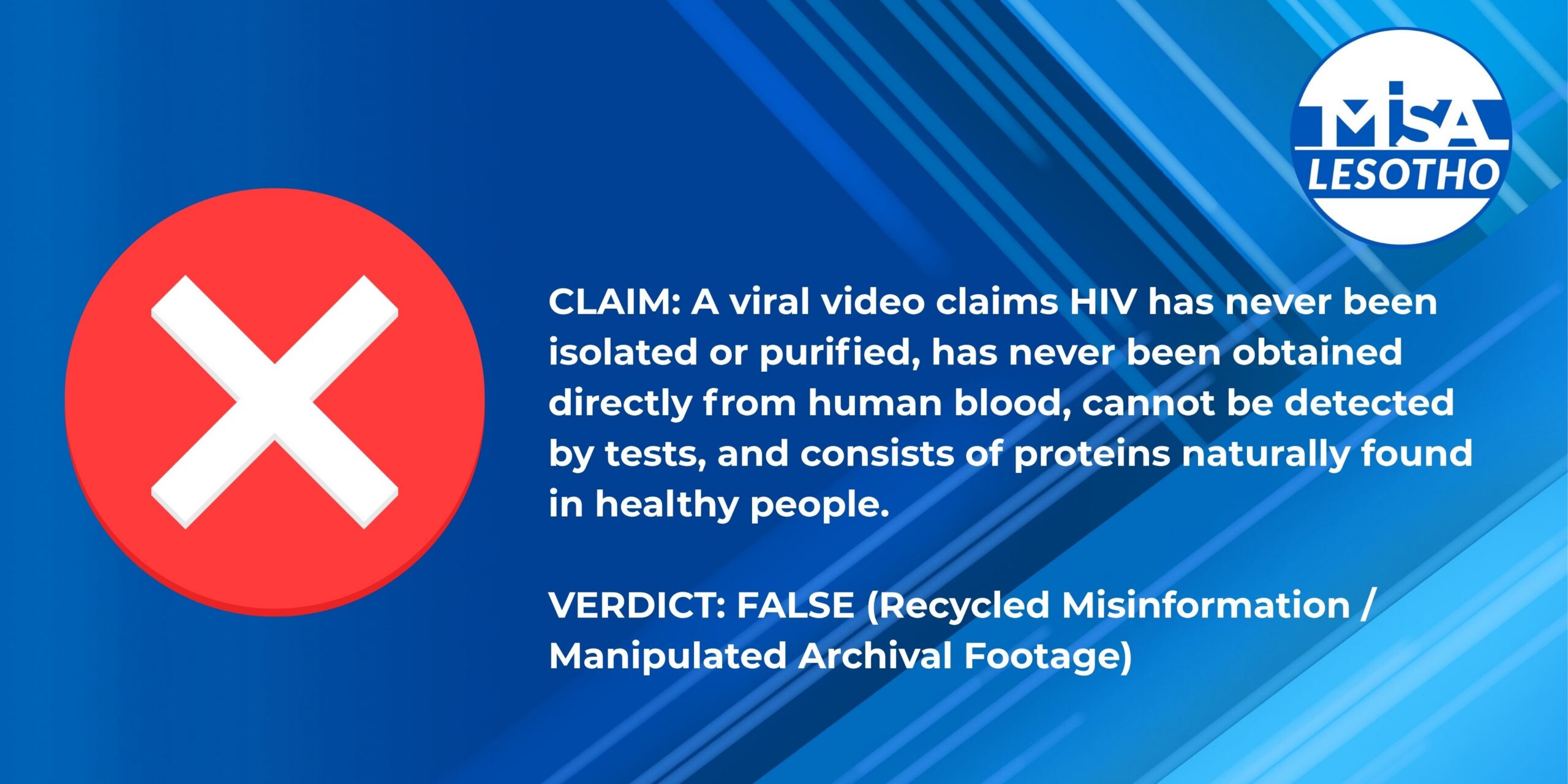
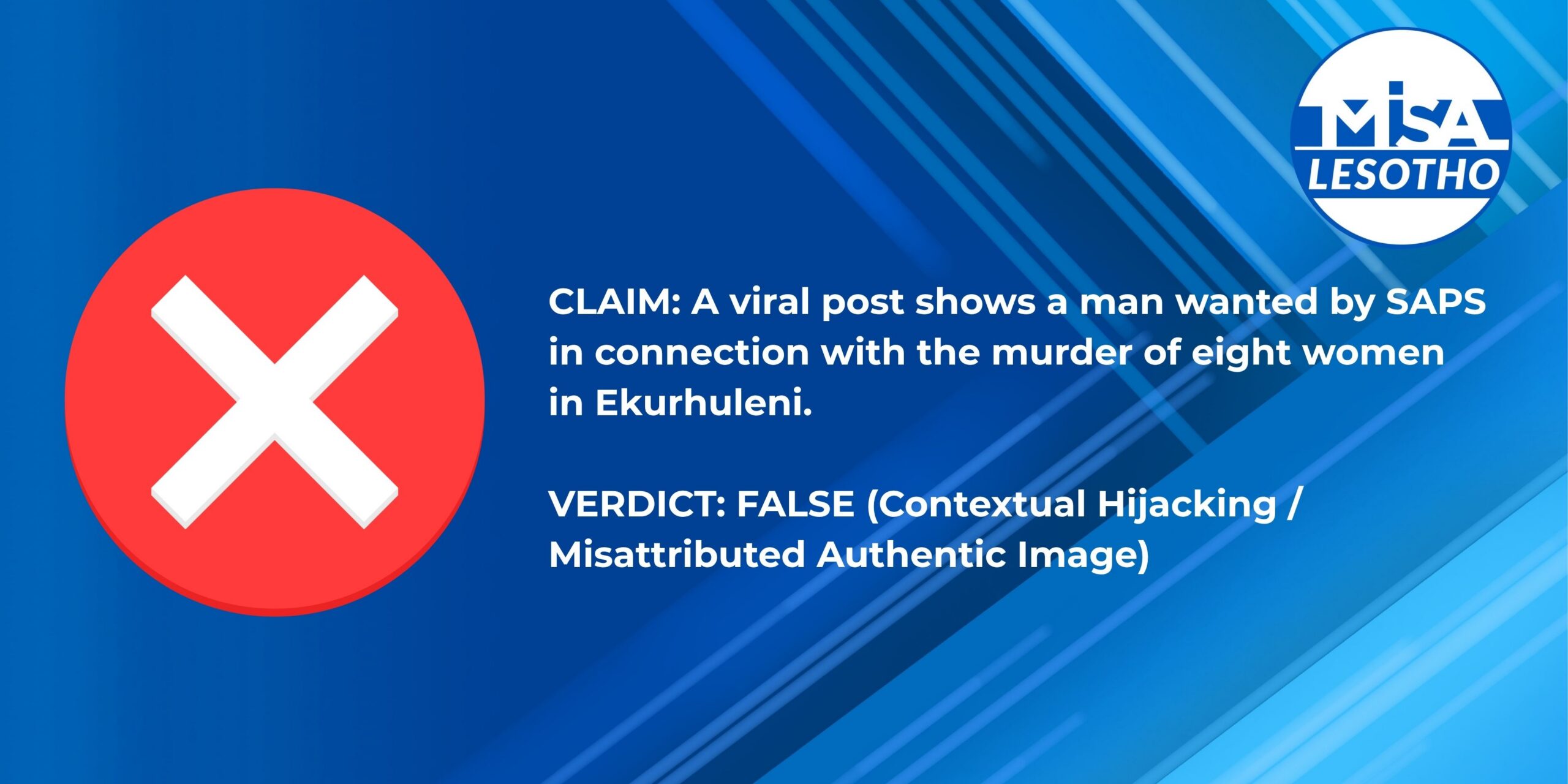
When platforms like MISA Lesotho’s CheckDesk intercept viral fabrications in real time, they demonstrate what proactive verification looks like. But civil society cannot carry this defense alone. Every government ministry and public body must institutionalize its own responsive fact-checking desk, treating rapid, transparent clarification not as a discretionary favor to journalists, but as an enforceable public duty owed to the nation.
When paired with platform-enforced badges and MISA Lesotho’s national Media and Information Literacy (MIL) policy initiative, we can build lasting immunity against viral manipulation, equipping every Mosotho to see through algorithmic traps and reject clickbait disguised as news.
Journalism was never meant to be a ghost operation hiding behind an anonymous screen. It is a sacred public service built on human responsibility, transparent bylines, and ethical rigor. In the end, reclaiming the badge of “News” is about far more than fixing social media feeds, it is about honoring the public trust, protecting democratic dialogue, and ensuring that Litaba remains the unshakeable bedrock of our nation.